
Upon arrival at Delhi International Airport you will be met by a representative and will be assisted for check in at the hotel.
Delhi always remains one of the oldest and charming cities in the world. It will be a great fact to know that the city is a combination of eight different cities. Each city was built in different era, under different dynasty and by different rulers. The foundation stone of this amazing city was laid by George V, Emperor of India during the Delhi Durbar of 1911.The design of this city was done by British architects, Sir Edwin Lutyens and Sir Herbert Baker. It is purely a mixture of Old and new time which you will witness in this city, on roads and in monuments. The city’s importance lies not just in its past glory as the seat of empires and magnificent monuments, but also in the rich and diverse cultures. Scratch beyond the gritty surface and you’ll swiftly discover that India’s capital is sprinkled with glittering gems: captivating historical monuments, magnificent museums, a vivacious performing-arts scene and some of the subcontinent’s yummiest places to eat.
Spend two nights at DELHI. Accommodation is in on bed & breakfast plan
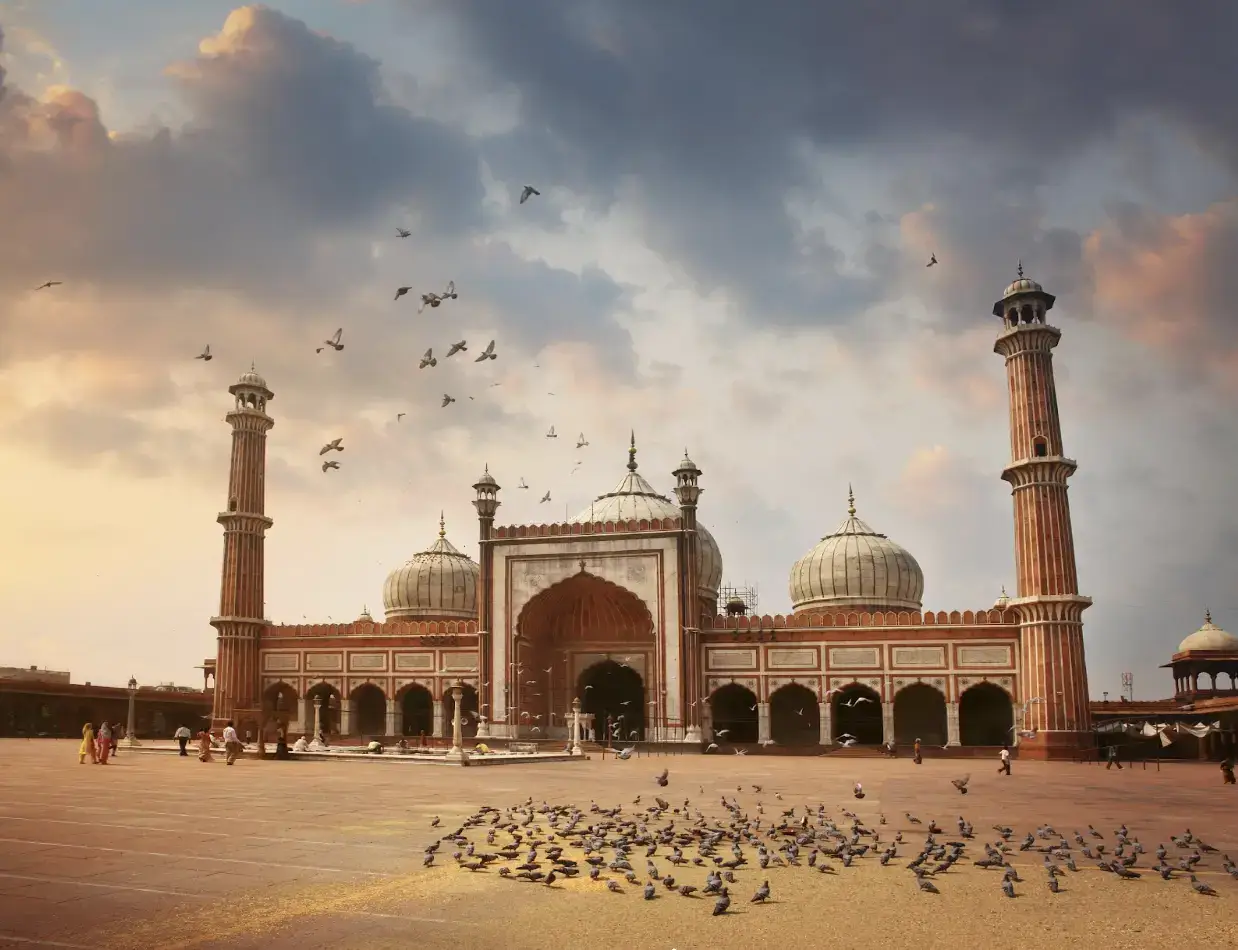
After breakfast proceed for the sightseeing of Old Delhi covering The Jama Masjid which is the last monument built by Shah Jahan in 1656. The Jama Masjid was designed to be a royal statement in many ways. It is located on a natural hill, south of Chandni Chowk, it was also called Masjid-I-Jahanuma (Mosque commanding a View of the world). After the visiting of Jama Masjid take a rickshaw ride through the snaking narrow lanes arranged accorded to trades, which is a fascinating experience. Some of these are Dariba, the silver and Jewellery market; Kinari Bazaar, specializing in trousseau wear and theatrical costumes. Later visit the Red fort which was constructed in 1638. The fort lies along the Yamuna River. It was the residence of the Mughal emperors of India for nearly 200 years, until 1857. It is located in the centre of Delhi and houses a number of museums. Later visit the Raj Ghat which is a memorial to Mahatma Gandhi is a simple black marble platform that marks the spot of his cremation on 31 January 1948. It is left open to the sky while an eternal flame burns perpetually at one end.
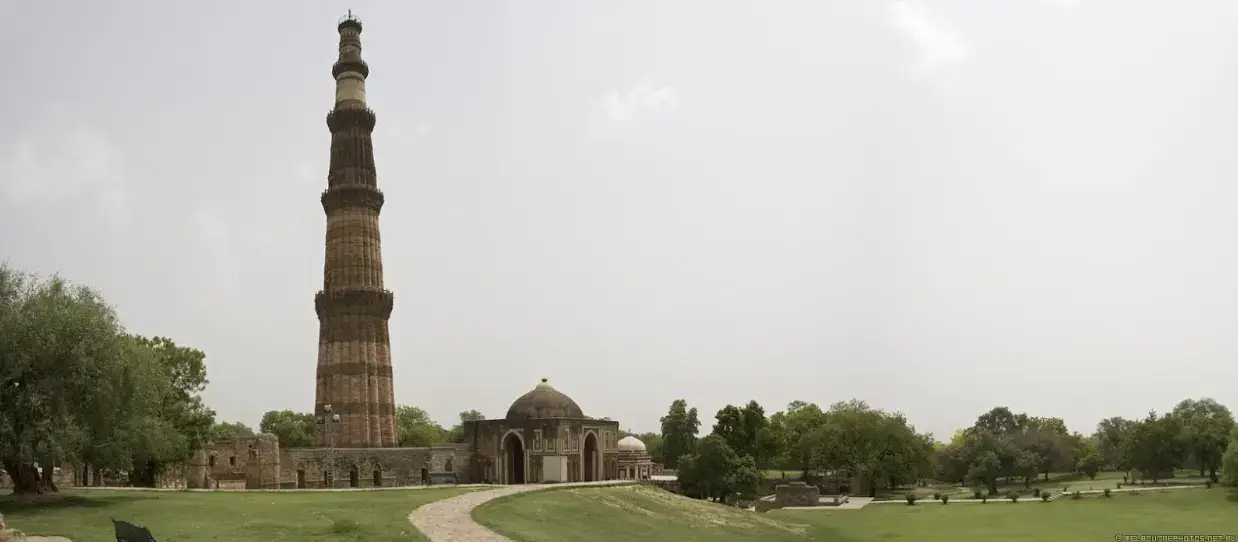
After breakfast proceed to visit Qutab Minar 73 m-high tower of victory, built in 1193 by Qutab-ud-din Aibak immediately after the defeat of Delhi’s last Hindu kingdom. The tower has five distinct storeys, each marked by a projecting balcony and tapers from a 15 m diameter at the base to just 2.5 m at the top. The first three storeys are made of red sandstone; the fourth and fifth storeys are of marble and sandstone.
Overnight stay at hotel.
After breakfast proceed for drive to Jaipur (05 Hour’s drive).
Jaipur, is also known with its nick name “The Pink city” of India, which was founded in 1727 by Maharaja Sawai Jai Singh II, the ruler of Amber, after whom the city has been named. In 1876, Prince Albert of Wales and Queen Elizabeth II visited the India. So to welcome him the whole city was painted in pink colour and after that pink marbles and paints are being used in the making of new buildings too and this put a tag of Pink city to it. This royal place is rich in heritage, culture and architecture. With amazing and splendid fortresses, majestic palaces, beautifully carved temples and havelis; which makes this city as an attraction in the minds of the tourist who is coming to India first time. It is not just the royal buildings and palaces that this city offers. Other than these captivating attractions, Jaipur displays exquisite handicrafts and spectacular jewellery.
On arrival check in at hotel
Afternoon visit Patrika Gate (One of the most famous photography point) for taking photos.
Later visit Birla Temple known as Laxmi Narayan Temple built by white marbles and this temple dedicated to God Vishnu and Goddess Laxmi.
Spend two nights at JAIPUR. Accommodation is on bed & breakfast plan.
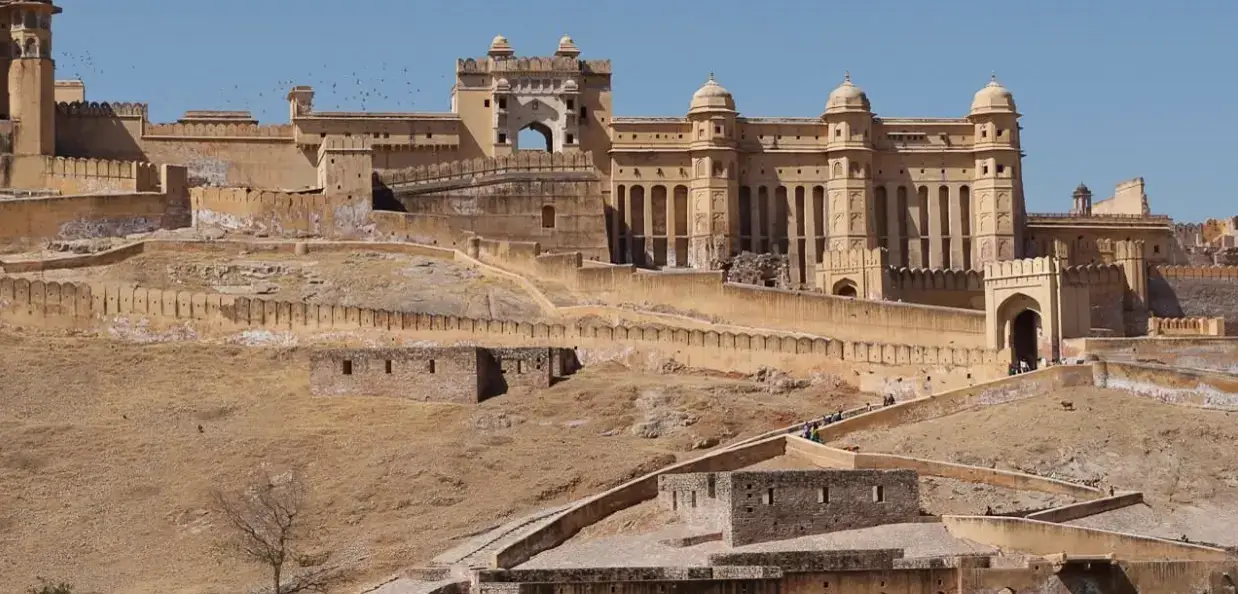
After breakfast proceed for the sightseeing of Jaipur by starting it from the visit of Amber Fort which is set in picturesque and rugged hills is a fascinating blend of Hindu and Mughal architecture. Constructed by Raja Man Singh I in 1592. Amer Fort is known for its artistic style of Hindu elements. With its large ramparts, series of gates and cobbled paths, the fort overlooks the Maota Lake, at its forefront. The aesthetic ambiance of this formidable fort is seen within its walls on a four level layout plan in a well turned out opulent palace complex built with red sandstone and marble consisting of the Diwan-e-Aam or the “Hall of Public Audience”, the Diwan-e-Khas the Sheesh Mahal (mirror palace) and the Sukh Niwas where a cool climate is artificially created by winds that blow over the water cascade within the palace. The fort can either be reached by Jeep, on foot.
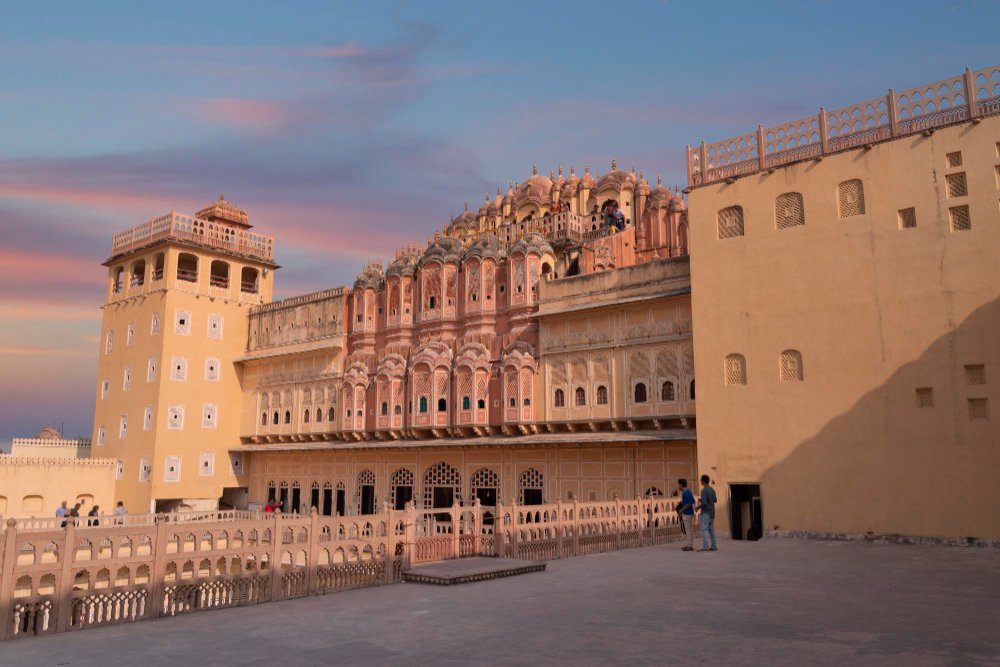
Later proceed to visit the City Palace was built between 1729 and 1732, initially by Sawai Jai Singh II, the ruler of Amber. He planned and the outer walls, and later additions were made by successive ruler’s right up to the 20th century. The palace consists of many different courtyards and gardens which gives an amazing view and experience to the palace visit. The structure includes Mubarak Mahal, Chandra Mahal, Pitam Niwas Chowk, Diwan-I-Khas, Diwan-I-Aam, Maharani Palace. Later visit the Observatory also known as Jantar Mantar which is a collection of architectural astronomical instruments. The observatory consists of fourteen major geometric devices for measuring time, predicting eclipses, tracking stars’ location as the earth orbits around the sun, ascertaining the declinations of planets, and determining the celestial altitudes and related ephemerides. Then drive pass the Hawa Mahal which is also known as the “Palace of winds”. It was built in 1799 by Maharaja Sawai Pratap Singh, and designed by Lal Chand Ustad in the form of the crown of Krishna, the Hindu god.
Overnight stay at hotel.
After breakfast proceed for drive to Ranthambore (03 Hour’s drive)
Ranthambore National Park is one of the largest national parks in northern India. It is situated 14 kilo Meters from Sawai Madhopur district and about 180 kilo Meters from Jaipur of southeastern Rajasthan in India. Being considered as one of the best place to view the powerful majestic predator Indian Tiger in the jungle. Ranthambore National Park is major wildlife tourist attraction and pulled attention of wildlife lover and photographers. Ranthambore National park is surrounded by the Vindhyas and Aravalis hill range and Ranthambore Tiger Reserve spread over an area approx 1410.64 sq.km including core and buffer area.
On arrival you will be assisted for check in at the hotel.
Evening Safari in the National Park.
Lunch & Dinner will be arranged at Hotel
Spend two nights at RANTHAMBORE. Accommodation is on bed & breakfast plan.
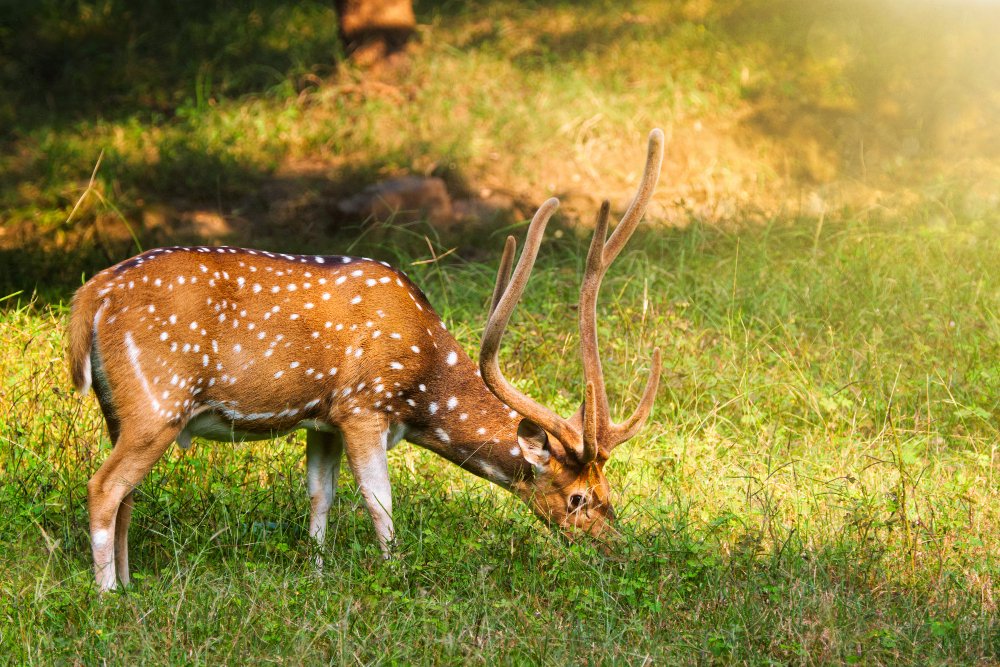
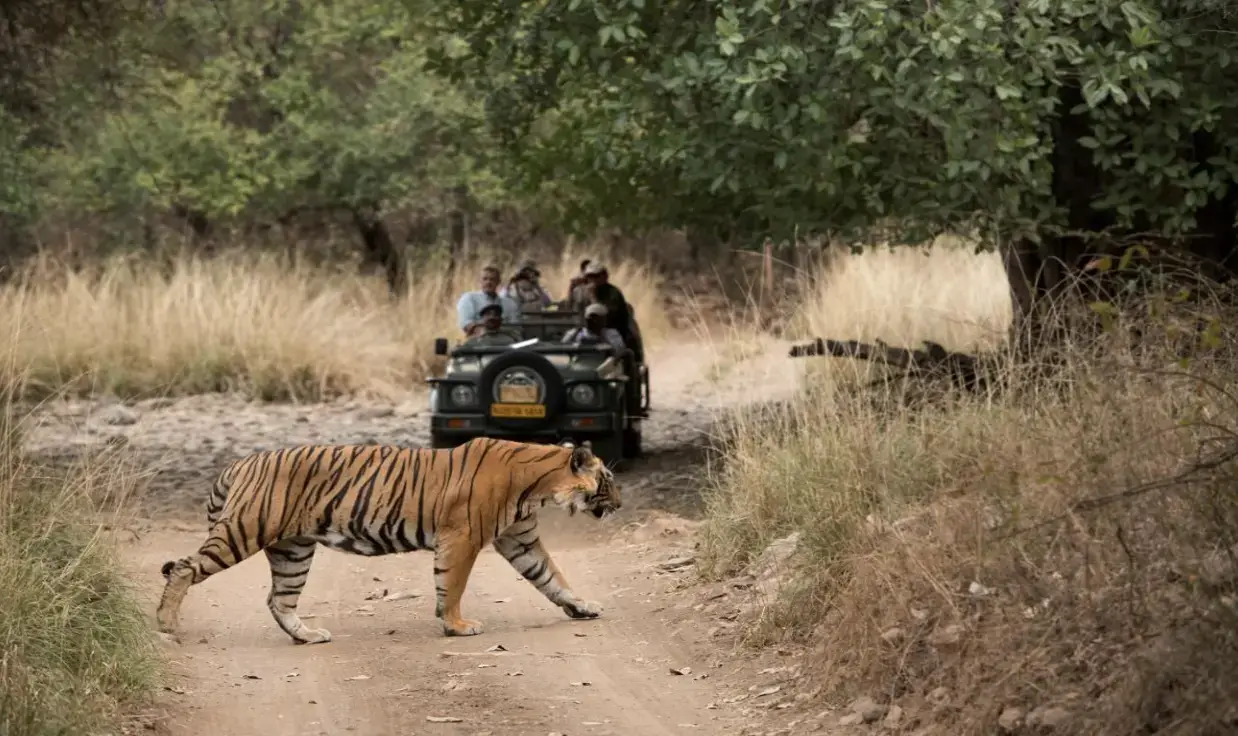
Early morning proceed for the Jungle safari at Ranthambore National park. Ranthambore is possibly the best place to see tiger in the wild and in the open. Other predators in the park are leopard, marsh-crocodile, jungle cat and hyena. The park also has a large population of jackal, sambar, chital and Nilgiri. Ranthambore has sounders of wild boar; Indian hare and mongoose are sometimes seen on the edge of the water. The park also has abundant bird life including Bonelli’s eagle, the crested eagle, Great Indian horned owl, gray partridge, painted partridge and tree pie paradise. The flycatcher, pheasant-tailed jacana, painted stork, spoonbill, white-necked stork and spur-fowl are also all found here.
Enjoy Morning & Evening Safari in the National Park by private exclusive gypsy.
Lunch & Dinner Will Be Arranged At Hotel.
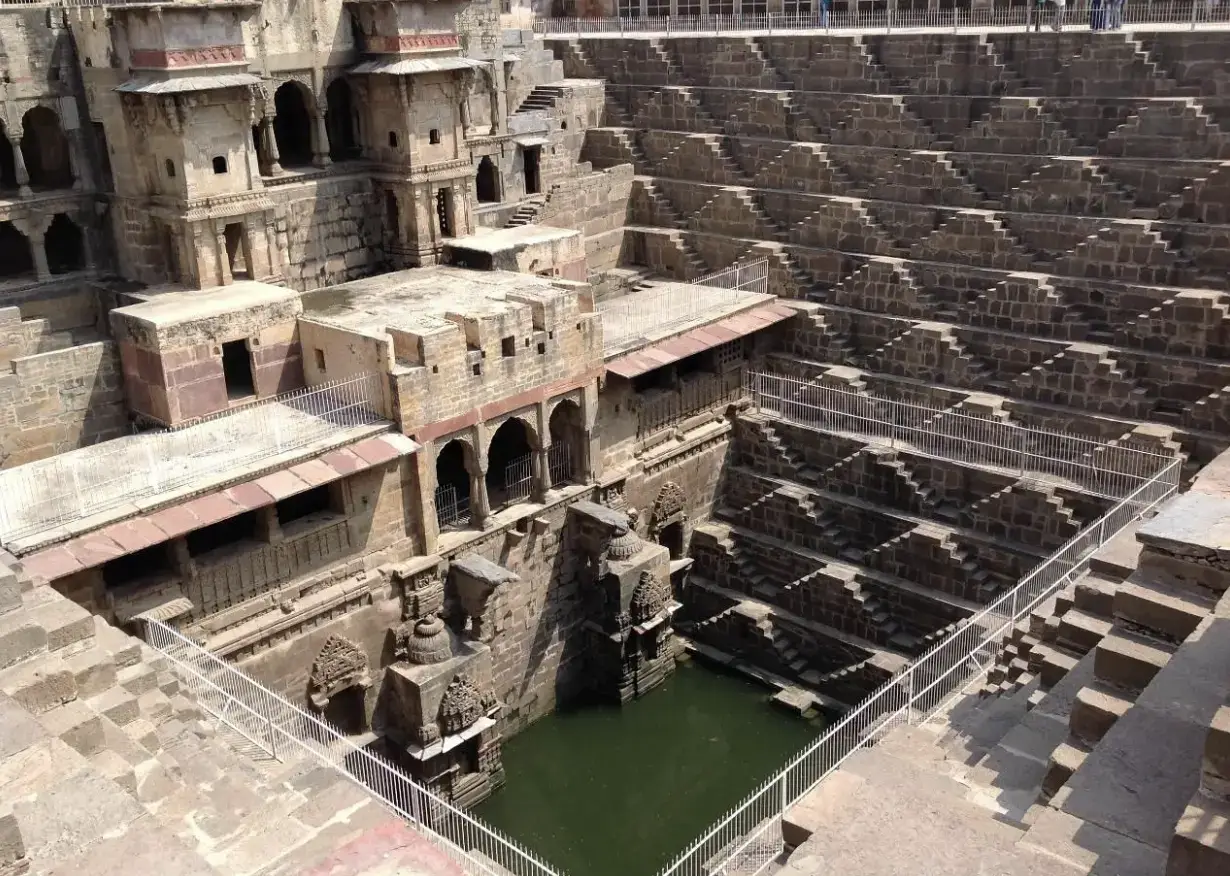
After breakfast proceed for a private road transfer to Agra (about 06 hours’ drive) enroute visiting Abhaneri. Abhaneri is a small village with one of India’s deepest and largest step wells (also known as tank gardens). Step wells are unique to India. They were used as cool places of resort, as pools for ritual cleansing before a temple visit and as a water supply for dry weather. There is a temple adjoining the step well.
Agra, a city which is not known as the former capital of India (Hindustan) but as a city of Taj Mahal. It is situated on the banks of river Yamuna. Though Agra’s history is largely recognised with Mughal Empire, the place was established much before it has linkages with the Hindu epic Mahabharata. It is know that Sultan Sikandar Lodi, the Ruler of the Delhi founded Agra in the year 1504. After the Sultan’s death the city passed on to his son Ibrahim Lodi. The golden age of this city began with the rule of Mughal Empire. During this period of time lot of building activity took place in Agra which had put this on the world map now. The founder of the Mughal Dynasty, Barbar, laid out first Persian garden on the banks of river Yamuna, which is known as Garden of Relaxation. His grandson Akbar raised the towering ramparts of the Great Red Fort along with a new city on the outskirts known as Fatehpur Sikri. His son Jahangir laid many gardens inside the Red Fort. And last but not the least Shah Jahan gave Agra city one of its priceless monument i.e. The Taj Mahal. Which was built in loving memory of his wife Mumtaz Mahal. Today this is one out of the Seven Wonders of the World.
On arrival you will be assisted for check in at the hotel.
Spend one nights in AGRA. Accommodation is on bed & breakfast plan.
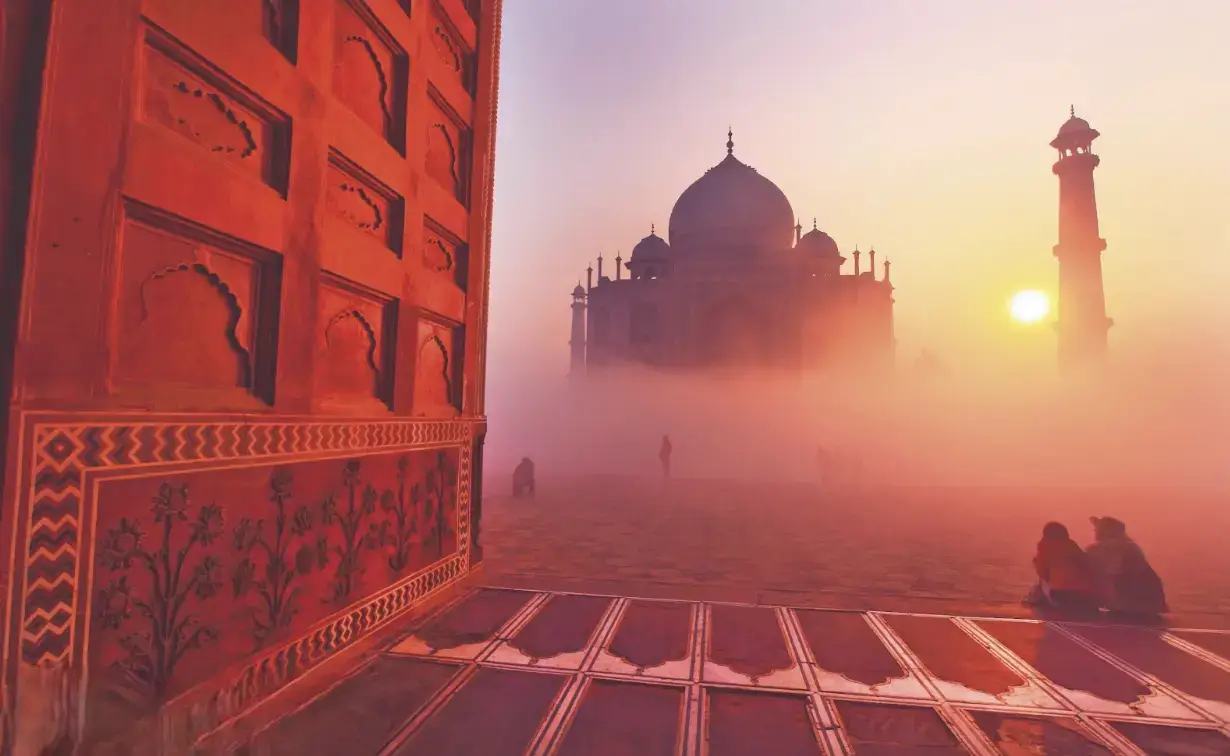
Early morning proceed to visit The Taj Mahal which was known as “Crown of Palace” built by Shah Jahan as an eternal symbol of his love for his favourite and 3rd wife, whom he called Mumtaz Mahal. The Taj Mahal is widely recognized as “the jewel of Muslim art in India and one of the universally admired masterpieces of the world’s heritage. The structure took 20,000 labourers and 22 years to complete. The Taj changes colour depending on the time of day.
Later return to hotel for breakfast
Later proceed to visit the Red Fort which is made by the Mughals. Though a fort had stood there since at least the 11th century. Agra Fort was originally a brick fort, held by the Hindu Sikarwar Rajput’s. But after this lot of Mughal rulers captured it but when Emperor Akbar arrived in Agra in 1558. He ordered to renovate the fort with red sandstone. Some 4000 builders daily worked on it and it was completed in 8 years i.e. starting in 1565 and finished in 1573. It is a mixture of Hindu & Mughal architecture.
Afternoon proceed for the drive to Delhi (about 04 hrs drive)
In the time you will be met by representative and proceed to airport to board your flight for onwards sector.
<strong>- – – – – – END OF OUR SERVICE – – – – – -</strong>
<img class=”aligncenter” src=”https://laatitudeindia.com/wp-content/uploads/2026/02/namaste.png” width=”100px/” />